• Skip to primary navigation
  • Skip to main content
  • Skip to primary sidebar

Nourished

  • Home
  • Recipes
  • Book Reviews
  • Restaurants
    • 3 Michelin Stars
    • 2 Michelin Stars
    • 1 Michelin Star
  • Journal
    • Art Journal
    • The Renaissance Diary
  • About
    • Contact Me
    • Instagram
    • Loves
    • Suppliers
    • Masterchef Links

Frontpage

September 13, 2014 Baking

The Meringue Girls Meringue Kisses…

OLYMPUS DIGITAL CAMERAI love the Meringue Girls on many, many levels – they’re cute, and they’re cute! They’ve taken something basic and created a niche market – good for them… In addition, their cookbook has brilliant little video clips which can be accessed via the cookbook by scanning a special code on your iPhone. They’re fun, informative, simple, and definitely give you a sense of their personalities: that’s often difficult to achieve in a cookbook.

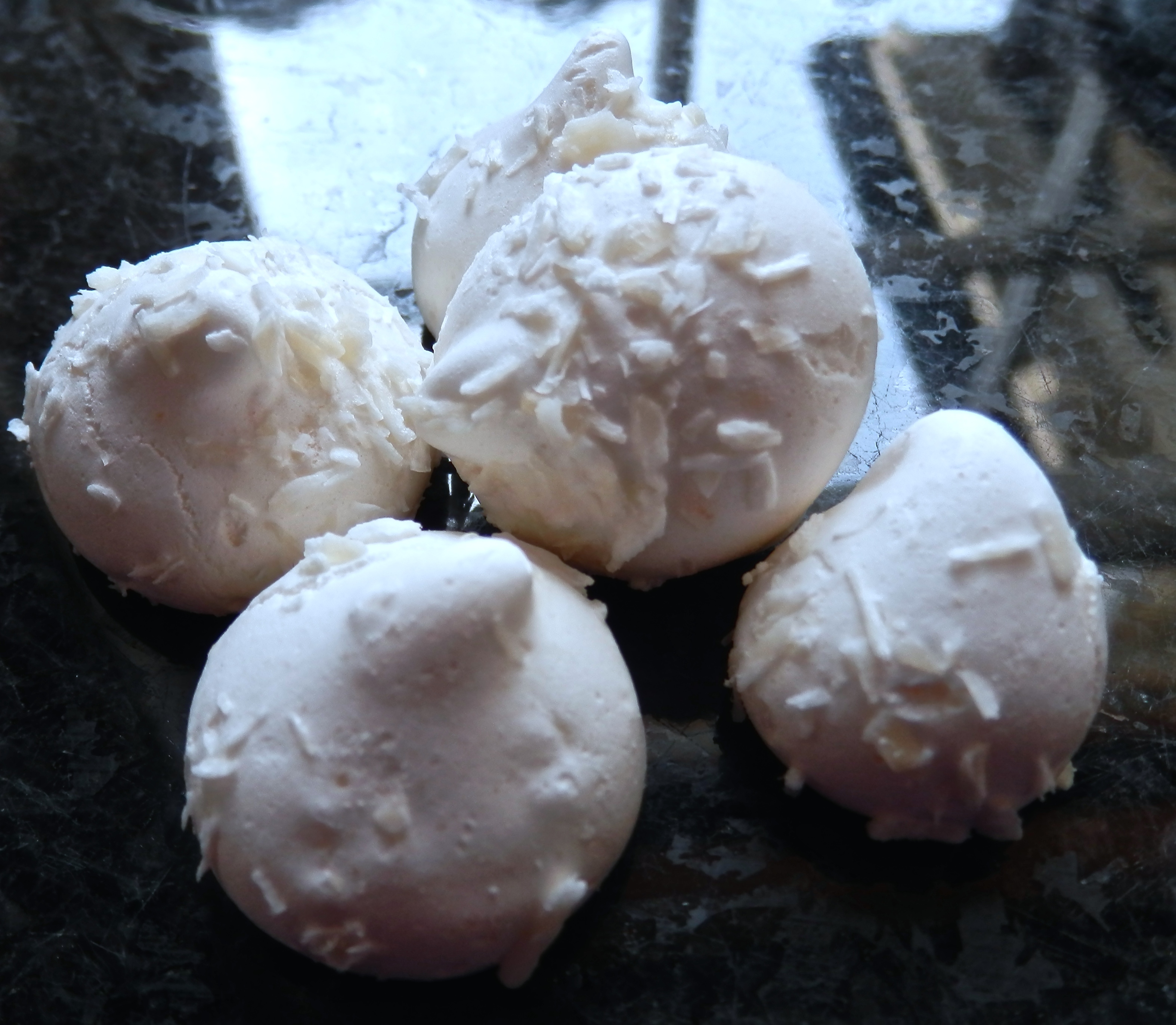
I’m particularly fond of their meringue kisses, because they’re easy to make, they look fabulous, and you can flavour them in all manner of ways.  They’re the perfect little gift, and make a great item for a charity bake sale.  My most popular flavour are the passion fruit, though the cocoa, raspberry and coconut are popular too.  (The coconut variety taste like a Bounty bar, without the additional calories.) I use Aromes, which are professional patisserie flavours, and these do make a difference.  If you’re going to make a large quantity of a particular flavour, an investment in them is well worth while – they also have the advantage of not adding too much liquid into your recipe.

The Meringue Girls technique is a little different to French Meringue (whisked with cold sugar), or Italian (whisked with a hot sugar syrup, and therefore cooked), or even Swiss (which is whisked over a bain marie to cook, then taken off the heat and whisked until cool).  In this method the sugar is heated in the oven while you’re preparing the whites… It does actually work well, so don’t feel it’s necessary to opt for a different technique.

I’m giving you their basic recipe – do look at their book for different flavour ideas…  Although the method section may seem quite long, do watch the videos included below the instructions – I promise you the Meringue Girls will make it all perfectly obvious in those videos

Ingredients:
150g free-range egg whites (5 medium eggs)
300g caster sugar
For flavourings, see Notes

Method:

  • Start by lining a large baking sheet with baking paper (this is the tray onto which you will pipe the meringues.  In reality this volume of ingredients will certainly fill two normal sized baking sheets, and at least one double oven sheet).
  • Pre-heat the oven to 200ºC.  Line a roasting tray with baking paper, pour in the caster sugar and put it in the oven for about 5 minutes until the edges are just beginning to melt. Heating the sugar will help it dissolve in the egg which more quickly to create a glossy stable mixture.
  • Meanwhile, weigh your egg whites in the free-standing mixer bowl, or a non-plastic bowl.  Make sure your bowl and whisk are free from grease.  Whisk slowly at first, allowing small stabilising bubbles to form, then increase the speed until the egg whites form stiff peaks, and the bowl can be tipped upside down without the egg falling out.
  • Keep an eye on the mixture and stop whisking just before it turns into a cotton woolly appearance, at which point the mixture will be over-whisked and will have lost some of the elasticity in the egg white protein
  • At this point, the sugar should be ready to take out of the oven.  Turn down your oven to 100ºC.  Leave the door ajar to speed up the cooling.
  • With the whites stiff and while whisking again at full speed, add one big tablespoon of the hot sugar ager another to the meringue mixture, ensure that it comes back yup to stiff peaks after each spoonful of sugars. Don’t worry about any small clumps of sugar, but avoid any larger chunks of caramelised sugars from the edges of the roasting tray.
  • Once you have added all of the sugar, continue to whisk on full speed for about 5-7 minutes.  Feel a bit of the mitre between your fingers, and if you can still feel the gritty star, keep whisking at full speed until the sugar has dissolved and the mixture is smooth, and the bowl is a little cooler to the touch.  The mixture will continue to thicken up during this stage.  You know when it’s read to use as it will form a nice smooth, shiny peak on the tip of your upturned finger.
  • To pipe the meringue kisses, turn a piping bag inside out, and place it over a jug or bottle, so that it stays in place.  Using natural good colouring and a clean paintbrush, paint 5 thick strips from the tip of your piping bag to halfway down the bag.
  • Then carefully spoon your stiff meringue mixture into the piping back, and turn the bag back the right way around.  You need to pack the meringue mixture in tightly, ensuring there are no air bubbles.
  • With sharp scissors, cut the tip of the piping bag to the size of a 20p coin.
  • To get the piping bag flowing, use some of the mixture to pipe small dollops onto the four corners of your baking sheets, and use like glue to stick your baking paper to the sheet.
  • Hold the piping bag with both hands, placing your dominant hand at the top of the piping bag and your other hand halfway down the bag.  Use the top hand to apply pressure and the lower hand to control the flow of the kisses.  Squeeze the bag (like and udder!) to form the kisses.  They should have a 5cm diameter and a big peak at the top.  You can use different nozzles for different effects.  For example a star nozzle will give you beautiful little star-like kisses.
  • Once you have assembled your meringues into the desired shapes on your lined baking sheet (leaving a couple of centimetres between each shape), bake for approximately 30-40 minutes.  Take them out of the oven as soon as they lift off the baking paper with their bases intact.
  • Leave them to cool on the baking sheet.

Notes:

  • It’s easier to use a liquid egg white, such as Two Chicks, rather than separating and measuring eggs
  • The Meringue Girls use a ratio of 1:2, egg whites to sugar.  I have seen other ratios, but for meringue kisses, this ratio works fine
  • Room temperature whites achieve more volume than cold whites, so once you’ve measured them, allow them to come to room temperature – usually around 30 minutes
  • Your equipment must be clean of grease – if necessary wipe a cut lemon around the inside of the mixing bowl
  • Flavourings can be added by including an ingredient directly into the mixture (for coconut, you stir 25g desiccated coconut into one batch, and sprinkle 25g over the batch – but I also included a few drops of coconut Arome; for chocolate you take 3 Tbsp of cocoa, including half into the mixture, and scattering the remainder over the meringues before cooking (though I did include a little chocolate flavouring in them too).
  • I don’t take my meringues out of the oven straight away, as I found they had a tendency to crack, from being cooled down too quickly.  I turn off the oven, and stick a wooden spoon into the top of the oven door, propping it ajar…
  • Any extra meringues will keep for two weeks in an air-tight container, though I doubt they’ll last that long, particularly if you have children!
You can watch the Meringue Girls in the following clips:
With Paul Hollywood
How to make the mixture
Colouring and piping the mixture
Giant meringues
The Rainbow Cake
Tips and techniques
You can get the Meringue Girls book here – and it’s well worth having a look – there’s much more in there than just the kisses…
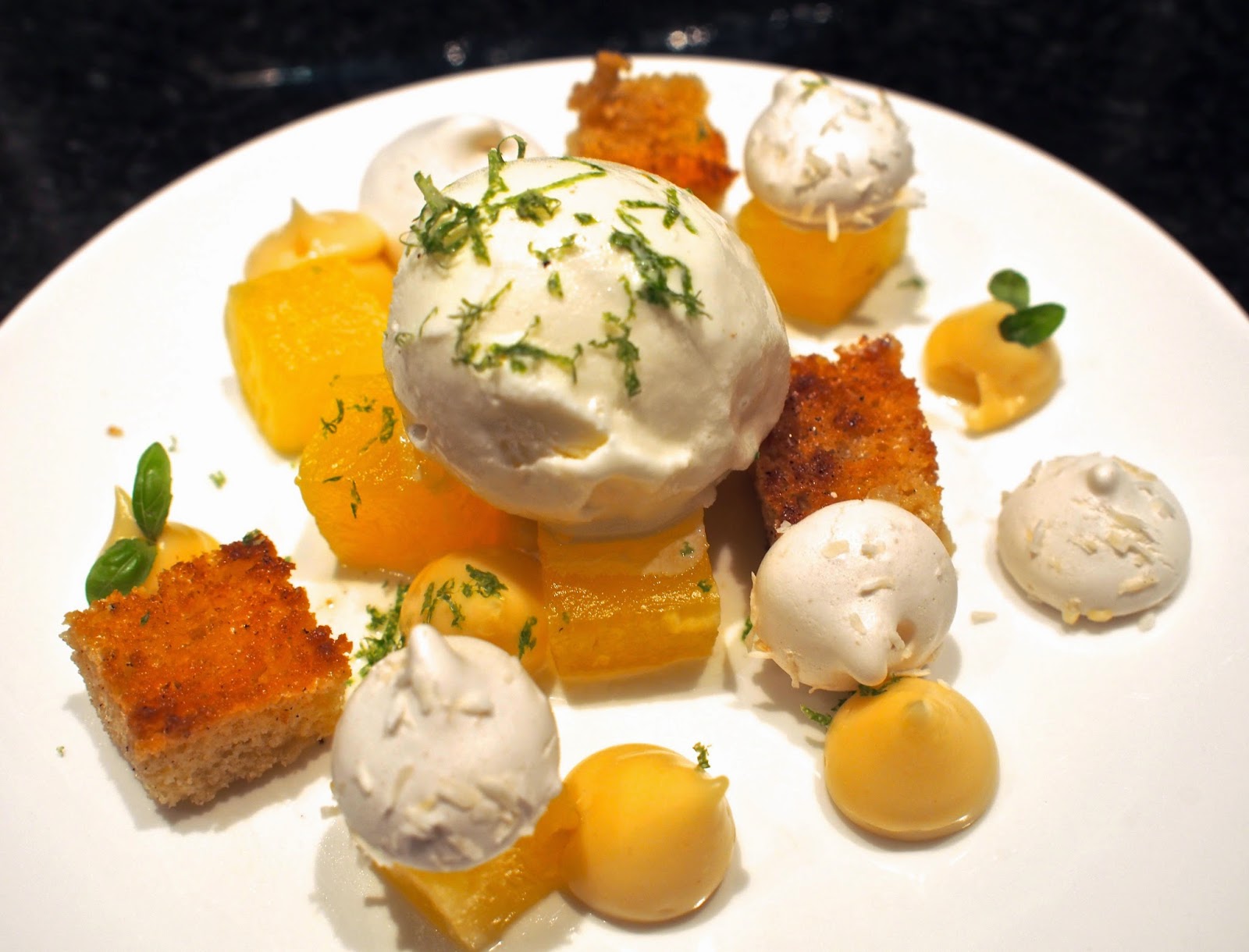
I’ve used coconut kisses as an element in a pineapple and coconut dessert:
Coconut meringues, coconut creme pattisserie,
brioche pain perdu, compressed pineapple, lime sorbet
They are also an intrinsic part of my petit-four collection, along with pâte de fruit, marshmallows, peanut butter fudge, macarons, and truffles.
Huge close up of coconut kisses…
A little bit of a joke, deliberately coloured and squat,
to look a little like little hats for some sugar work I was making
Production line for the school Christmas Fayre, along with
pâte de fruit – there are passion fruit, raspberry, cocoa, and blackberry there
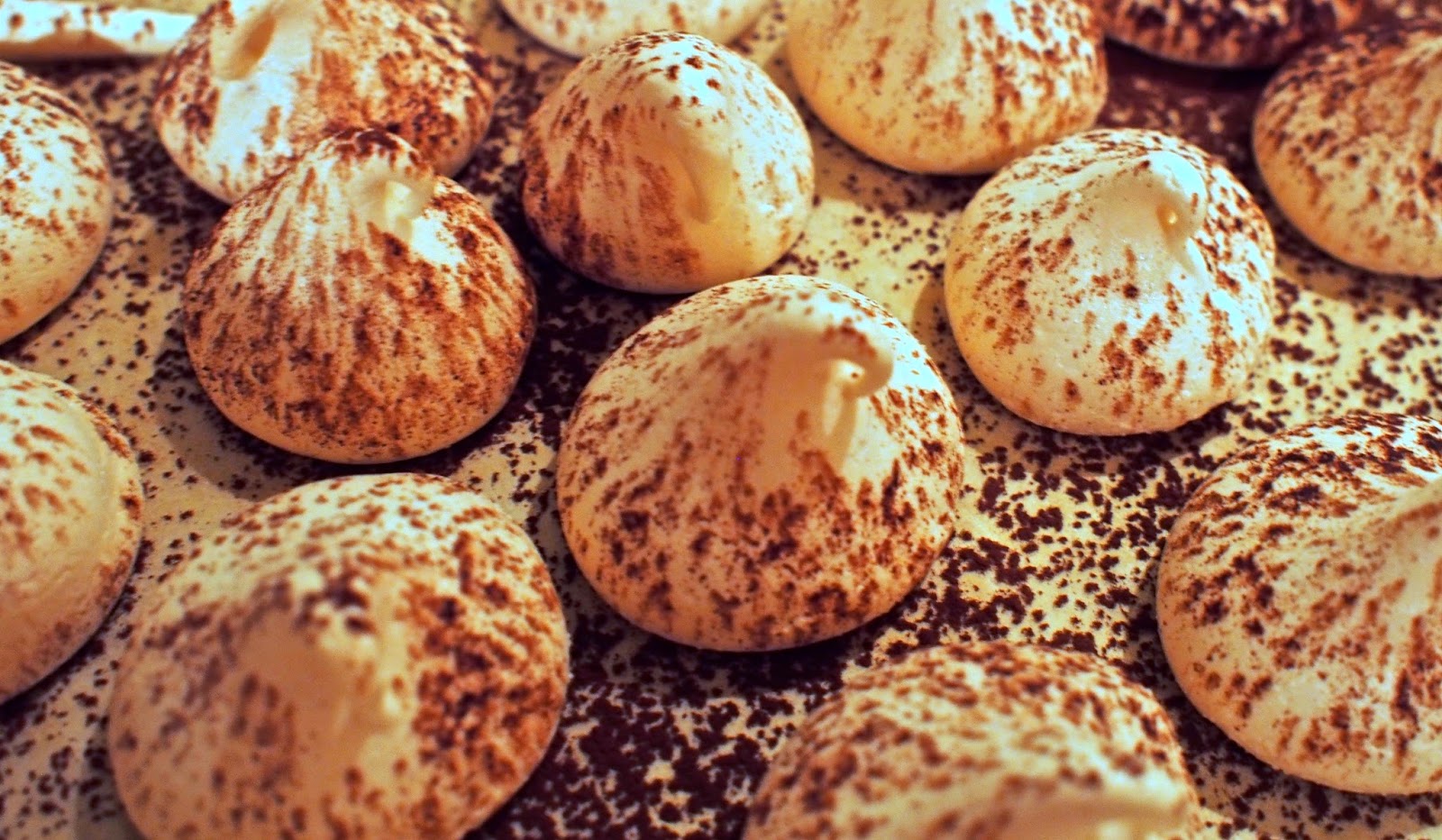
Cocoa and chocolate flavoured meringues 

April 10, 2013 Recipe

Chocolate Delice

I realise that I don’t usually pay homage to a chef when making a recipe, but the legendary Monsieur Blanc is no ordinary chef!  Nearly as important to my culinary journey as the Roux Brothers, Raymond is completely self-taught, and his Manoir aux Quat’Saisons has held two Michelin stars since 1985 – no mean feat.  As well as sharing my birthday, Raymond is a most amusing and very brave man – he served both his first and second wife a croquembouche on their wedding day…

This delice was featured on Kitchen Secrets, a most enlightening look at a number of dishes and techniques.  Every time I see an episode, I note another little detail.  You can see this particular recipe on You Tube, which certainly shows you how simple it can be.

Ingredients

For the base
100g/3½oz toasted hazelnuts
100g/3½oz caramelised sugar pieces
150g /5¼oz bran flakes, slightly crushed

For the delice
140ml/5fl oz full-fat milk
325ml/11½fl oz double cream
2 free-range eggs
340g/12oz good-quality dark chocolate, minimum 60 per cent cocoa solids, roughly chopped

For the caramel hazelnuts
125g/4½oz caster sugar
8 hazelnuts, shells removed, lightly toasted in a dry frying pan

For the coffee foam
200ml/7¼fl oz strong black espresso coffee
1 sheet gelatine, soaked in cold water for 10 minutes, drained

To serve
2-3 tbsp cocoa powder
1 tbsp freshly ground coffee beans

Preparation method

  • For the base, blend the hazelnuts and caramelised sugar pieces in a food processor until you have a smooth paste. Heat the paste in a small pan on a gentle heat until warmed through.
  • Place the bran flakes and warmed praline paste into a mixing bowl and scrunch them together, using your hands, until the bran flakes have broken down and been incorporated into the paste.
  • Line a baking tray with a sheet of greaseproof paper, then transfer the praline mixture onto it. Cover the praline mixture with a second sheet of greaseproof paper, then roll the mixture out until it measures at least 14cm x 20cm/5½in x 8in and is 0.5cm/¼in thick.
  • Remove the top sheet of greaseproof paper, then push a 14cm x 20cm x 3cm/5½in x 8in x 1¼in rectangular pastry frame down onto the praline mixture and trim off any excess. (NB: The excess praline mixture can be pressed into any gaps in the mould, if necessary.)
  • Cover the mould with greaseproof paper and chill the praline in the fridge for 30 minutes, or until set.
  • Meanwhile, for the delice, heat the milk and cream in a saucepan and heat gently over a medium heat until it just reaches boiling point.
  • Meanwhile, whisk the eggs in a bowl.
  • As the milk and cream mixture comes to the boil, pour it over the eggs, then whisk the mixture constantly until smooth and thick.
  • Stir in the chopped chocolate and whisk again until the chocolate has melted and the custard is smooth.
  • Remove the base from the fridge and pour in the chocolate delice to fill the mould. Gently tap the sides of the mould to release any trapped air bubbles, then smooth the surface using a palette knife. Chill in the fridge for 6-12 hours, or until completely set.
  • Meanwhile, for the caramel hazelnuts, heat the caster sugar in a pan over a low heat, stirring occasionally until golden-brown and caramelised. Remove from the heat and set aside to cool slightly. (NB: The caramel is cool enough when a cocktail stick dragged across its surface leaves an imprinted trail.)
  • Spear each hazelnut onto a cocktail stick, then dip the hazelnuts into the caramel until coated. Stick a little adhesive putty onto the underside of a shelf or cupboard above a worksurface and secure the cocktail stick into the putty, so that the caramel drips off the hazelnut and creates a tail. (NB: Place a baking tray or sheets of greaseproof paper underneath the hazelnuts to catch any caramel that drips.)
  • Set the caramel hazelnuts aside to cool and harden for at least 30 minutes.
  • For the coffee foam, just before serving, heat half of the coffee in a pan until just hot but not boiling.
  • Squeeze the gelatine sheet dry, then add it to the hot coffee and continue to warm until the gelatine has completely dissolved.
  • Pour the remaining cold coffee into a bowl, then add the hot coffee mixture to it. Whisk well until the mixture starts to foam.
  • To serve, heat the outside of the mould using a chefs’ blow torch to loosen the base of the delice. Carefully remove the pastry frame from the delice.
  • Heat the top of the delice very quickly using a chefs’ blow torch to make the surface glossy. Dust the delice with some of the cocoa powder and ground coffee beans.
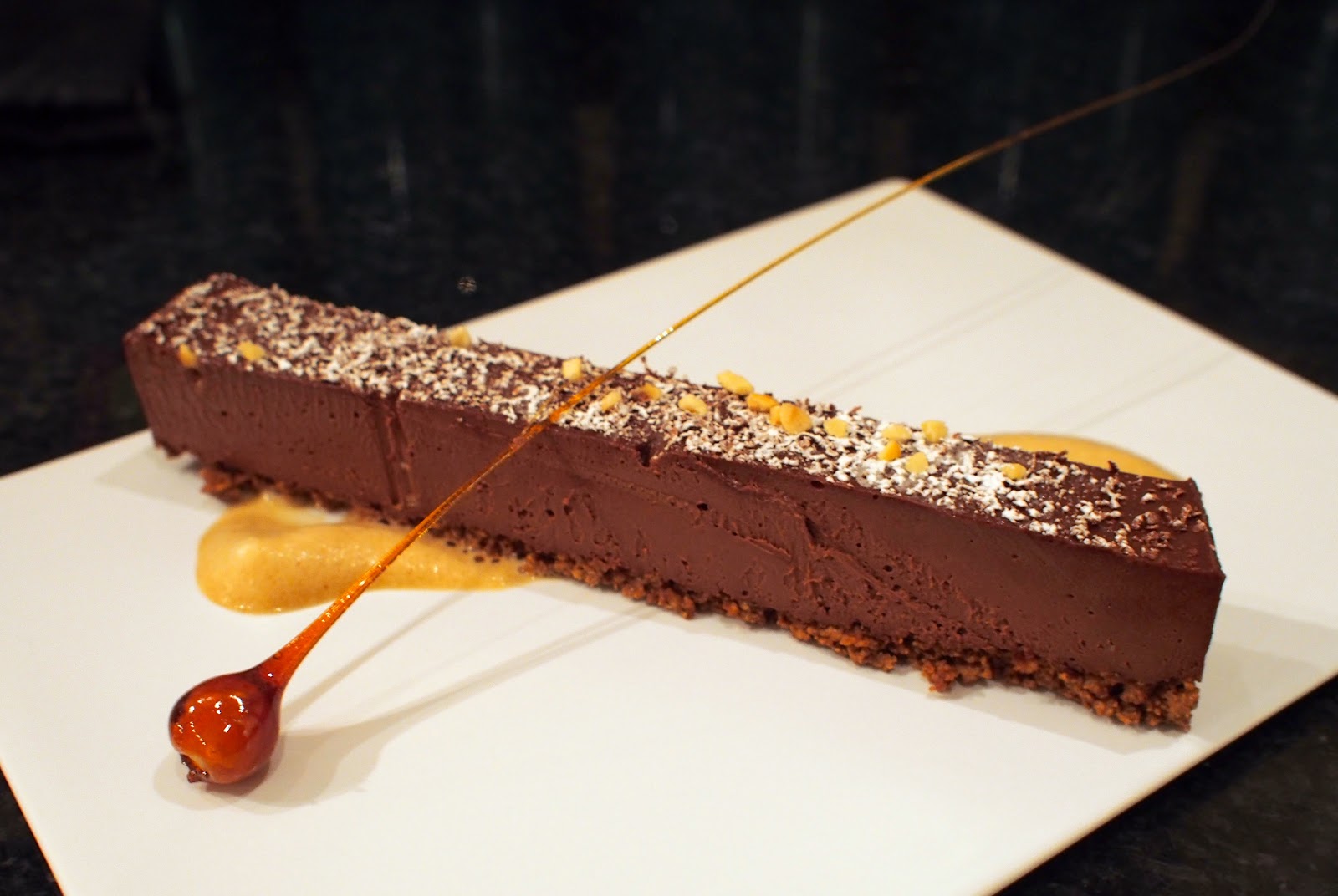
  • Smear a teaspoonful of the coffee foam across the width of six to eight serving plates. Plunge the blade of a knife into boiling water to heat the metal, then slice the delice into six to eight pieces and place one onto each smear of foam, at an angle. Rest a caramel hazelnut against each slice. Dust each serving with the remaining cocoa powder.

Whisk the mixture constantly until smooth and thick

Stir in the chopped chocolate and whisk again until the chocolate has melted and the custard is smooth

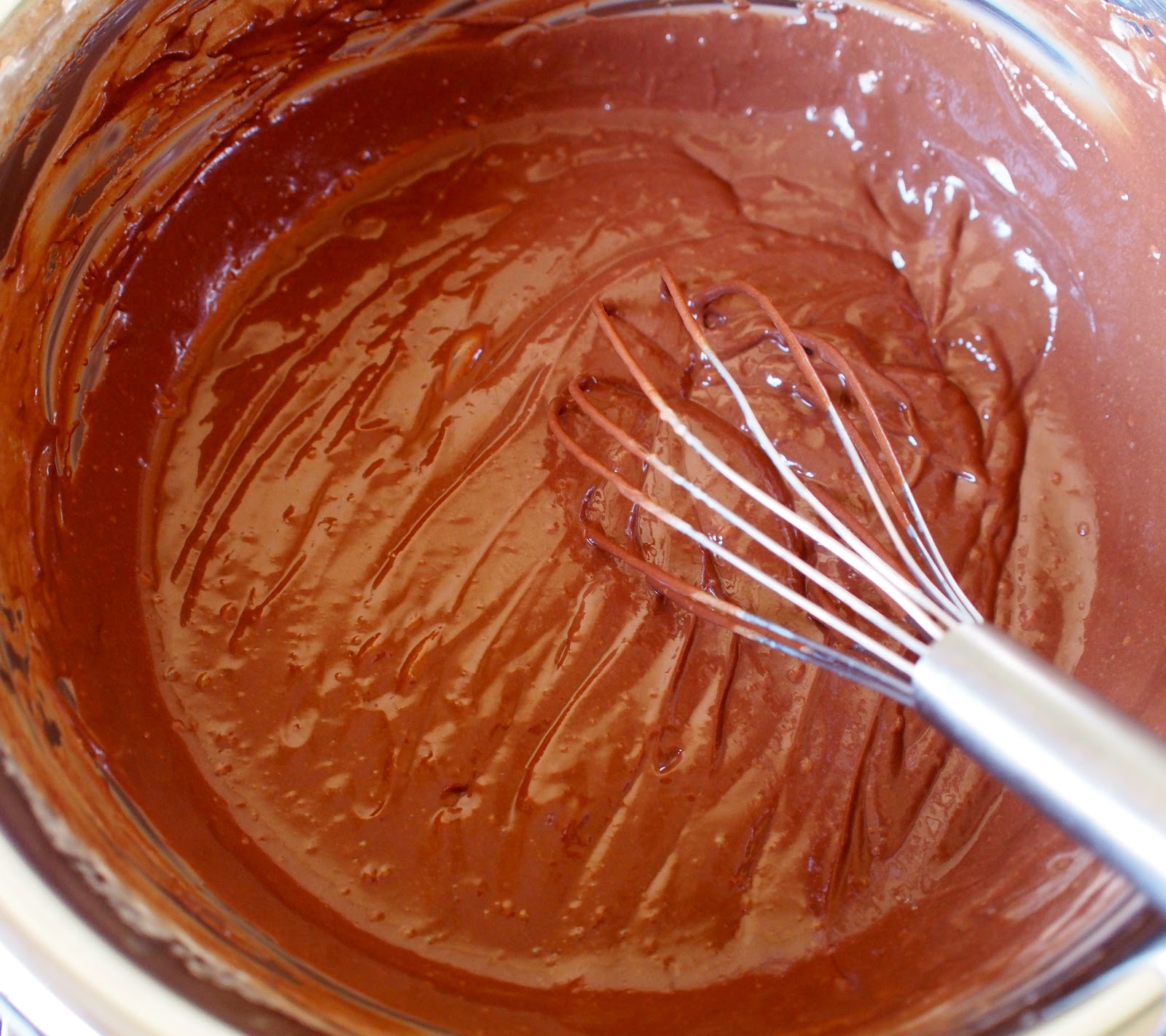
It will look like this, leaving ribbons on itself…
Pour in the chocolate delice to fill the mould (I didn’t have a rectangular mould to hand)
Watch your caramel, it’s cool enough when a cocktail stick dragged across its surface leaves an imprinted trail
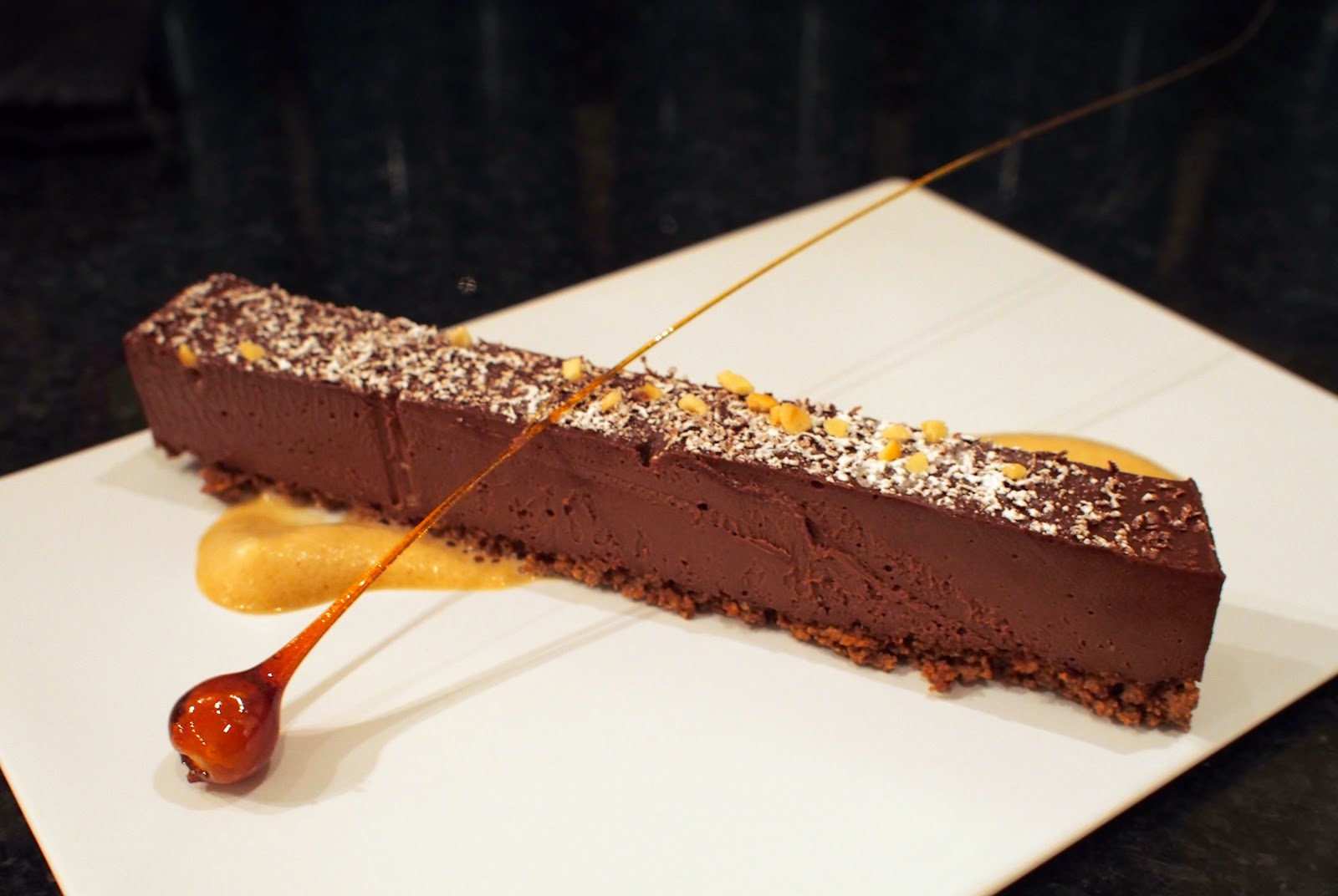
The finished article – a gigantic slice of chocolate delice – I’d recommend a slice about half the size

November 25, 2012 Fish

Steamed turbot, crushed potatoes with crab, and buerre noisette…

My on-going lack of a gas supply has resulted in me turning to some alternative methods of cooking.  I wanted to pan-fry some turbot, in a loose tribute to Tony Fleming’s dish, but actually as his was steamed, it suddenly motivated me to get the steamer out of the cupboard – I’m quite sure it’s not even been used a dozen times – but now it was going to come into it’s own!  Needless to say the children had eaten all my lovely tomatoes – so the sauce vierge was also going out of the window.  I swapped over to a beurre noisette and capers – and here you have it…

The potatoes would apparently take 45 minutes in a steamer (45 minutes ?!?!?!), and the thickness of the turbot looked as though it would take 15 minutes.

I cooked the buerre noisette on a portable induction hob, ensuring that the butter had gone to a golden colour – then throw in some capers – and in my case, a little white balsamic vinegar, my new addiction.

The potatoes were crushed with a little white crab meat, and some sorrel and butter….

Overall, actually pretty quick, extremely effective and the steamer may find a place slightly higher in my list of gadgets than previously…


  • « Go to Previous Page
  • Go to page 1
  • Go to page 2

Primary Sidebar

I’m passionate about food, its provenance and its sustainability. As a technical cook, I like to see what’s happening in the kitchens of Michelin starred restaurants, but you’re just as likely to find me at home making sourdough. You can find some of my recipes in In The Mix 2, an award-winning Thermomix cookbook.

I’m also truly blessed – I can open my fridge at any time and know it’s crammed with all manner of loveliness – but that’s not the case for everyone. There are people all around me in the UK who rely on food banks to feed their kids, and themselves, and every box of cereal or teabag makes a difference. You can donate food to your local food bank, or time, or money, and if you want more information the best starting place is http://www.trusselltrust.org.

You can also find me here:

Foodies100 Index of UK Food BlogsFoodies100
The Renaissance Epicurean... London restaurants
Top Food BlogsUK Food Bloggers Association

The Eleven Madison Park Granola

Copyright © 2026 · Cookd Pro Theme On Genesis Framework · WordPress · Log in

Nourished
  • Home
  • Recipes
  • Book Reviews
  • Restaurants
  • Journal
  • About